
Reap what You Sow
“Reap What You Sow: Valuing Workplaces that Grow Good Ideas” makes a case for biophilic design as an investment, not a cost. Published by PLP Labs with academics from Loughborough University, the University of Reading, and biophilic experts, the study shows a clear, credible method for measuring and monetising the well-being and environmental benefits of biophilic design. By turning design choices into concrete financial values, it helps real estate clients compare these interventions fairly against other project costs. The message is simple: invest in spaces that help people thrive, and the returns follow.
1. Introduction
How do we capture the value of biophilic design?
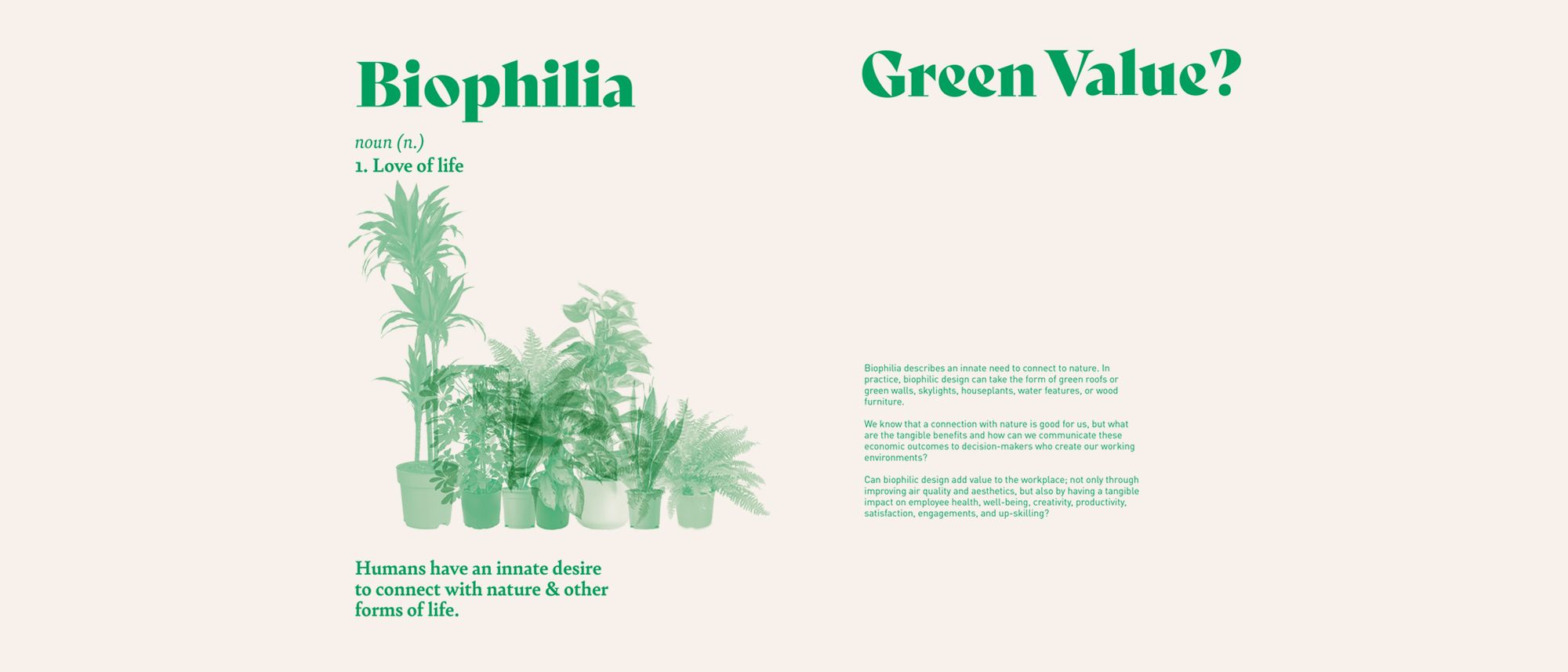
Biophilia: the love of life

How do we capture the value of biophilic design?
By measuring the well-being and environmental effects of biophilia in architectural design, we outline a process for monetising its value. If design decisions are given a monetary value we can empower real estate clients to fairly evaluate the worth of these interventions alongside other project costs.

2. Background
We do our best thinking in restorative and stimulating environments commonly and abundantly found in nature.
Our minds are hardwired to respond positively to environments that offer water, daylight, plants, and shelter. Several psychological theories and hypothesises all document and point to this phenomenon.

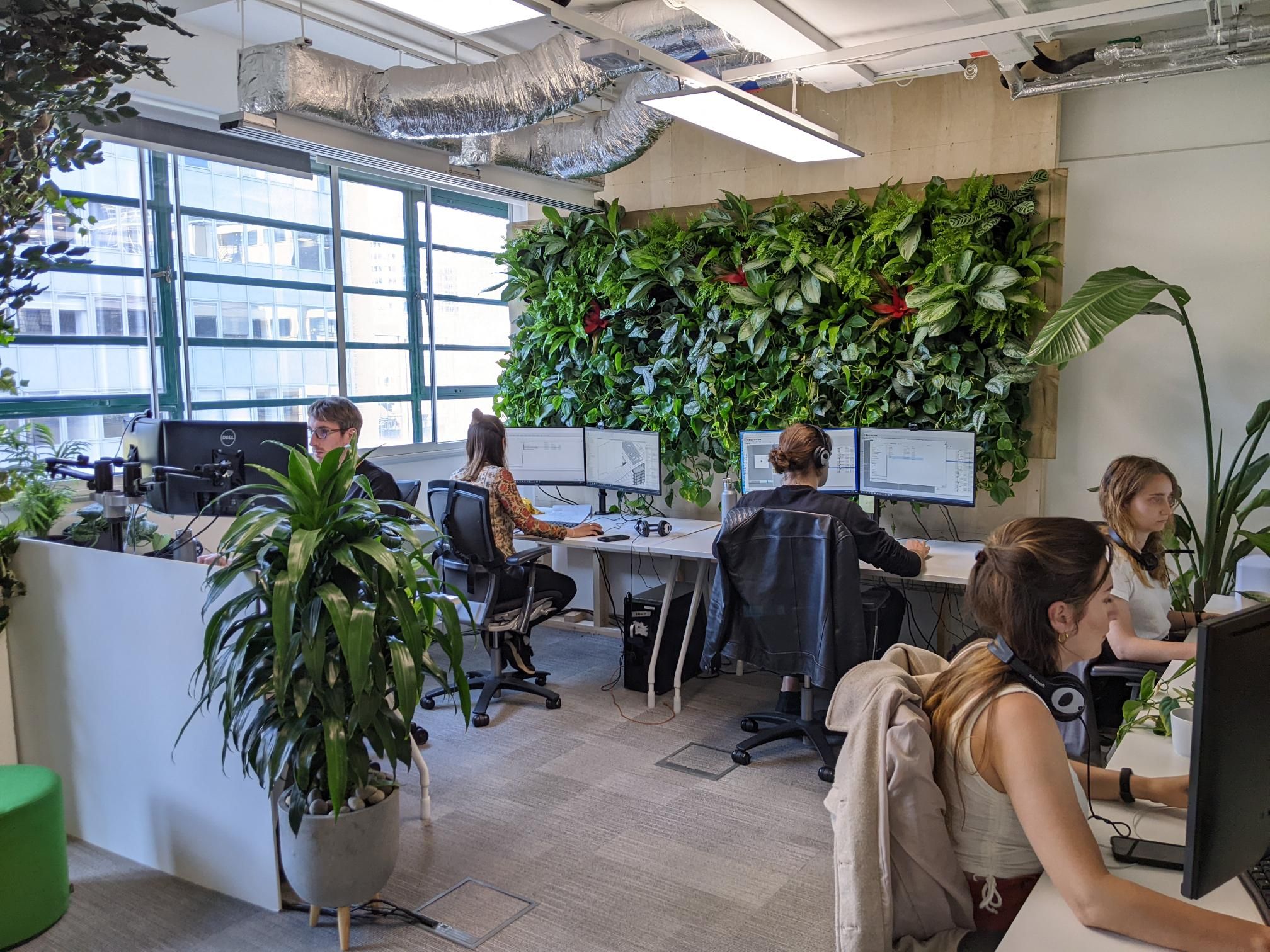
Experts suggest that we prefer natural environments because our brains evolved in nature.
3. Appraisal
Nature has a profound impact on our physical, mental, and emotional stasis, but how do we account for this impact?
Due to the brain’s positive reaction to nature, biophilic design is positively correlated to well-being, as well as productivity, happiness, and life satisfaction.
By introducing nature into the office environment, businesses may increase the value of their staff and workplace at a fraction of the cost of other interventions, like team retreats or office renovations. The dramatic spike of interest in biophilic workplace design in recent years comes at no surprise.
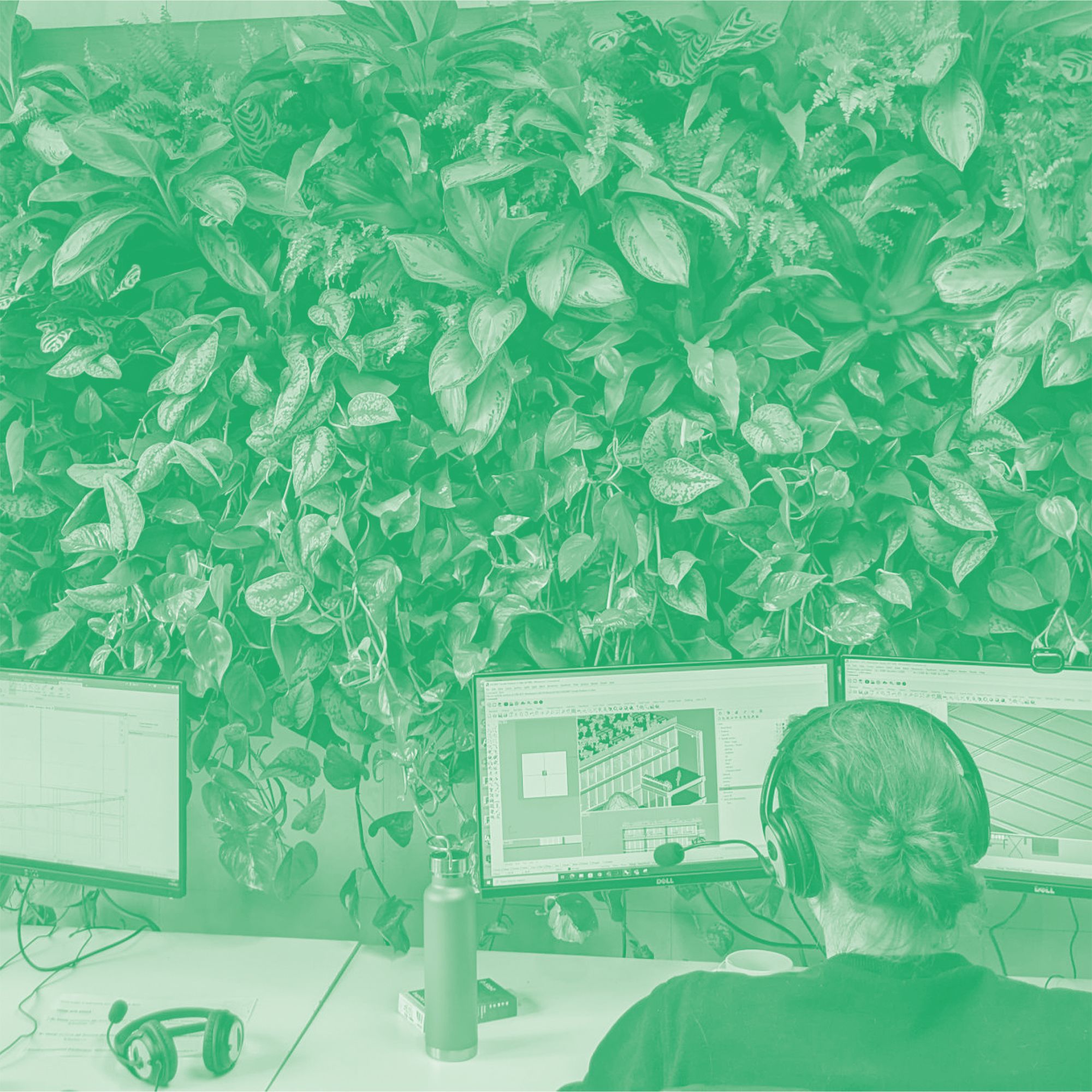
Biophilia impacts the corporate bottom line.
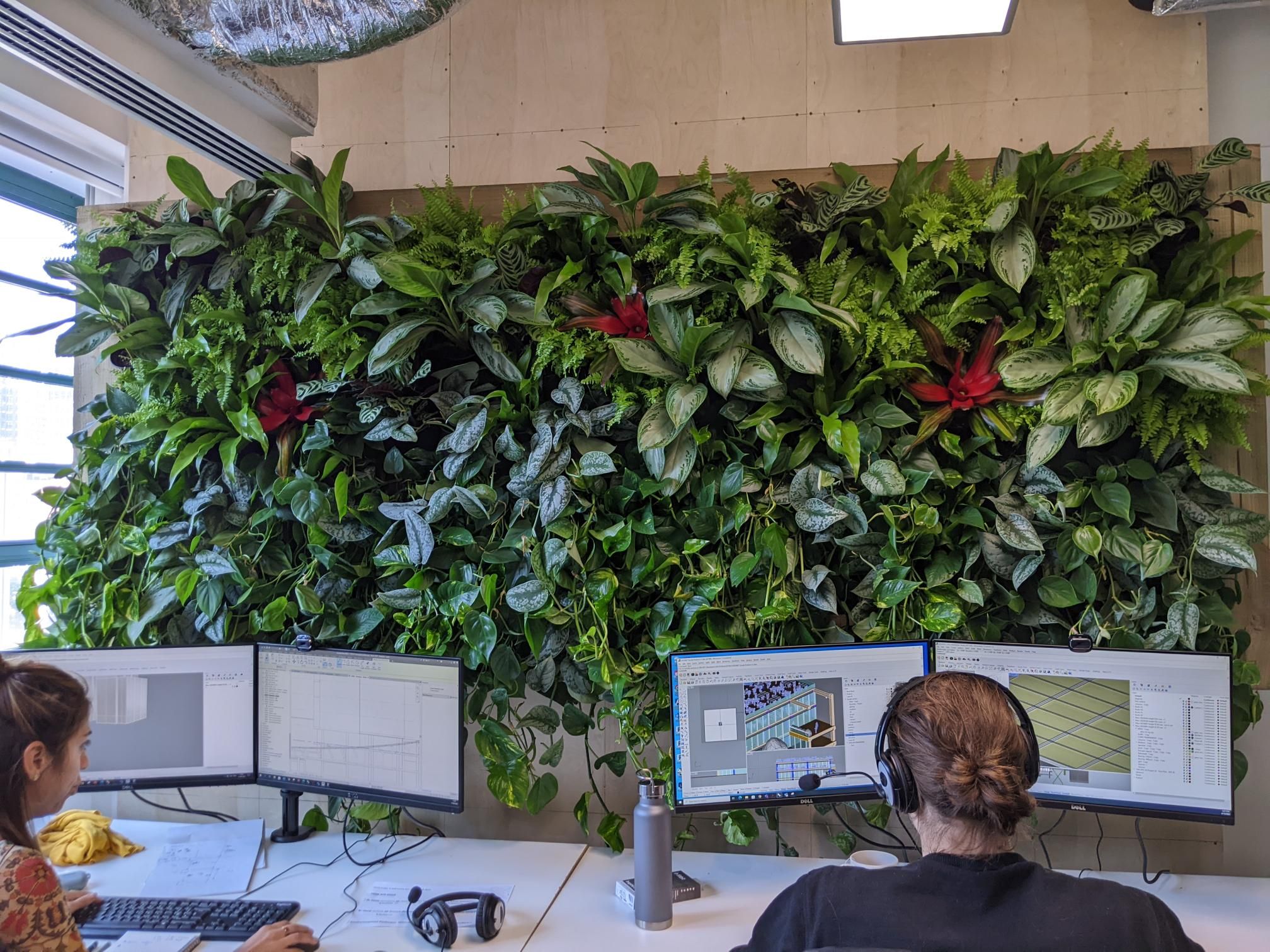
Biophilic design is still seen as an expenditure rather than an investment. We challenged this misgiving by investigating the tangible financial benefits of high quality spatial and environmental design. When attached to a £ sign, biophilic design has the potential to drive commercial decision-making.
The monetary representation of biophilia, and by extension its associated benefits, provides investors with a more holistic and representative understanding of the value of design during the briefing and budget planning stage.
4. In-House Pilot Study

In-House Pilot Study
The study observed and measured the subjective parameters, chosen from the 15 patterns of biophilic design (10), to make comparisons between the three main scenarios.
5. Scenarios & Methods
There were two key variables: indoor green and views out.
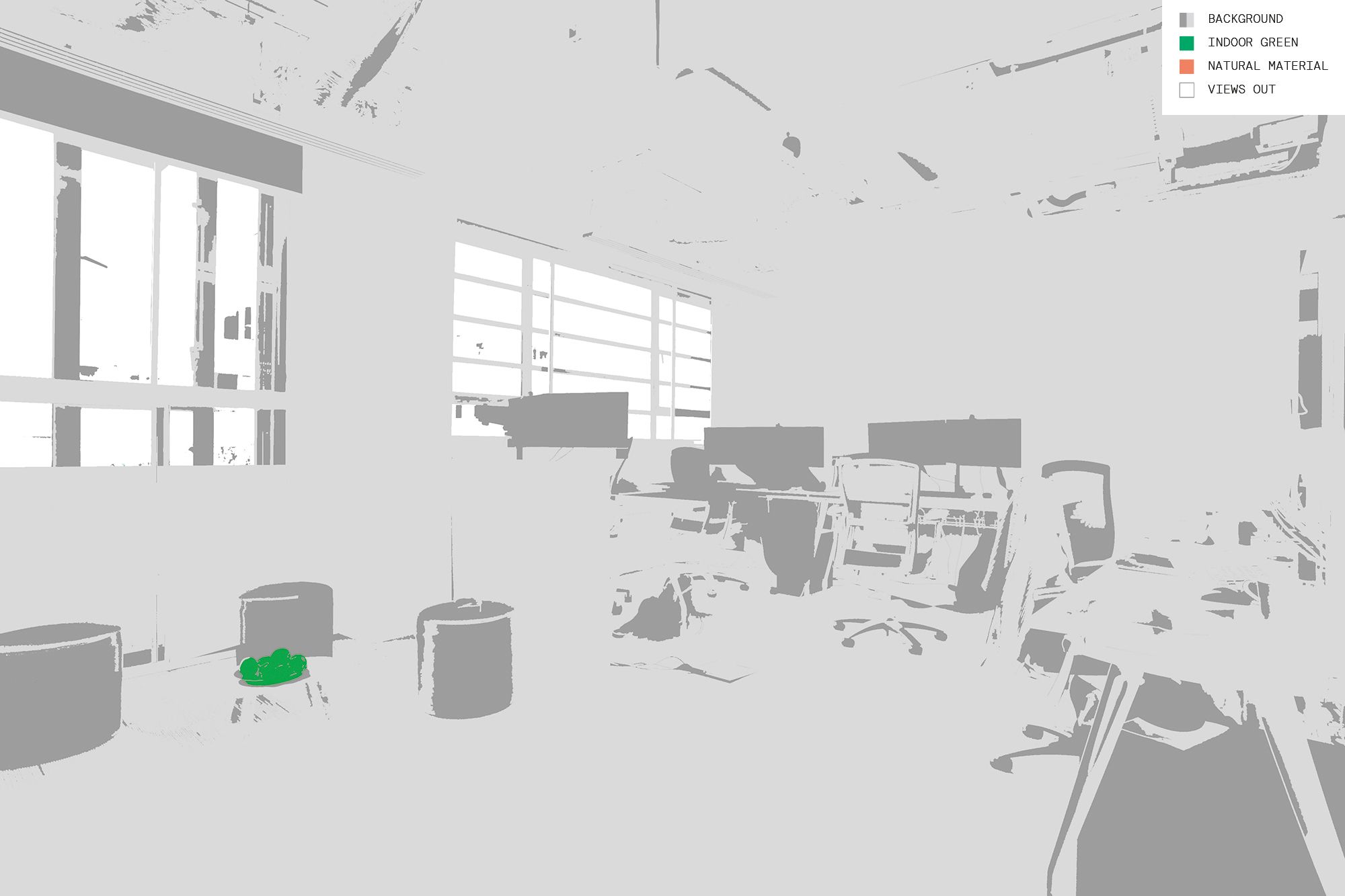
Baseline
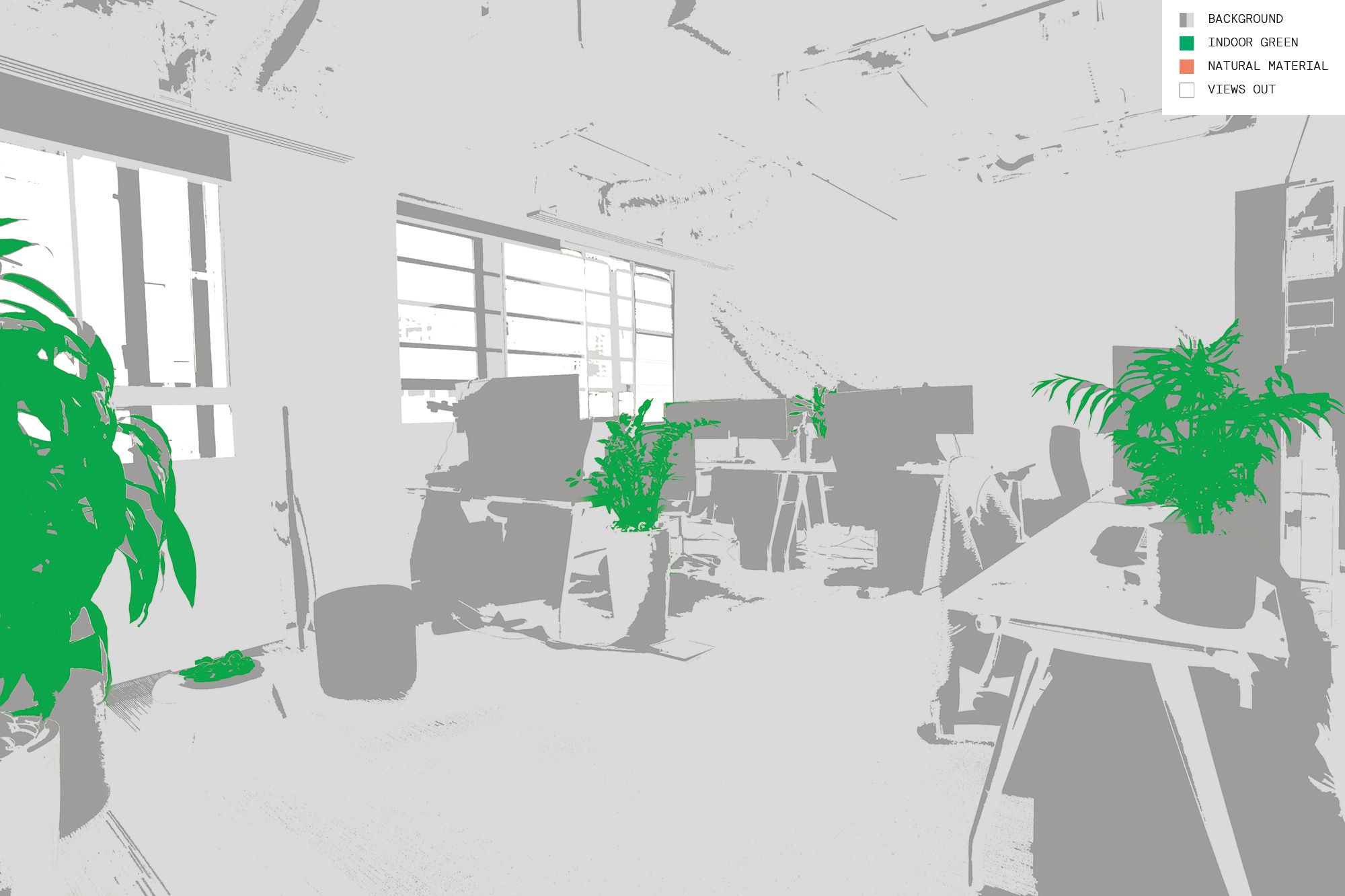
Typical
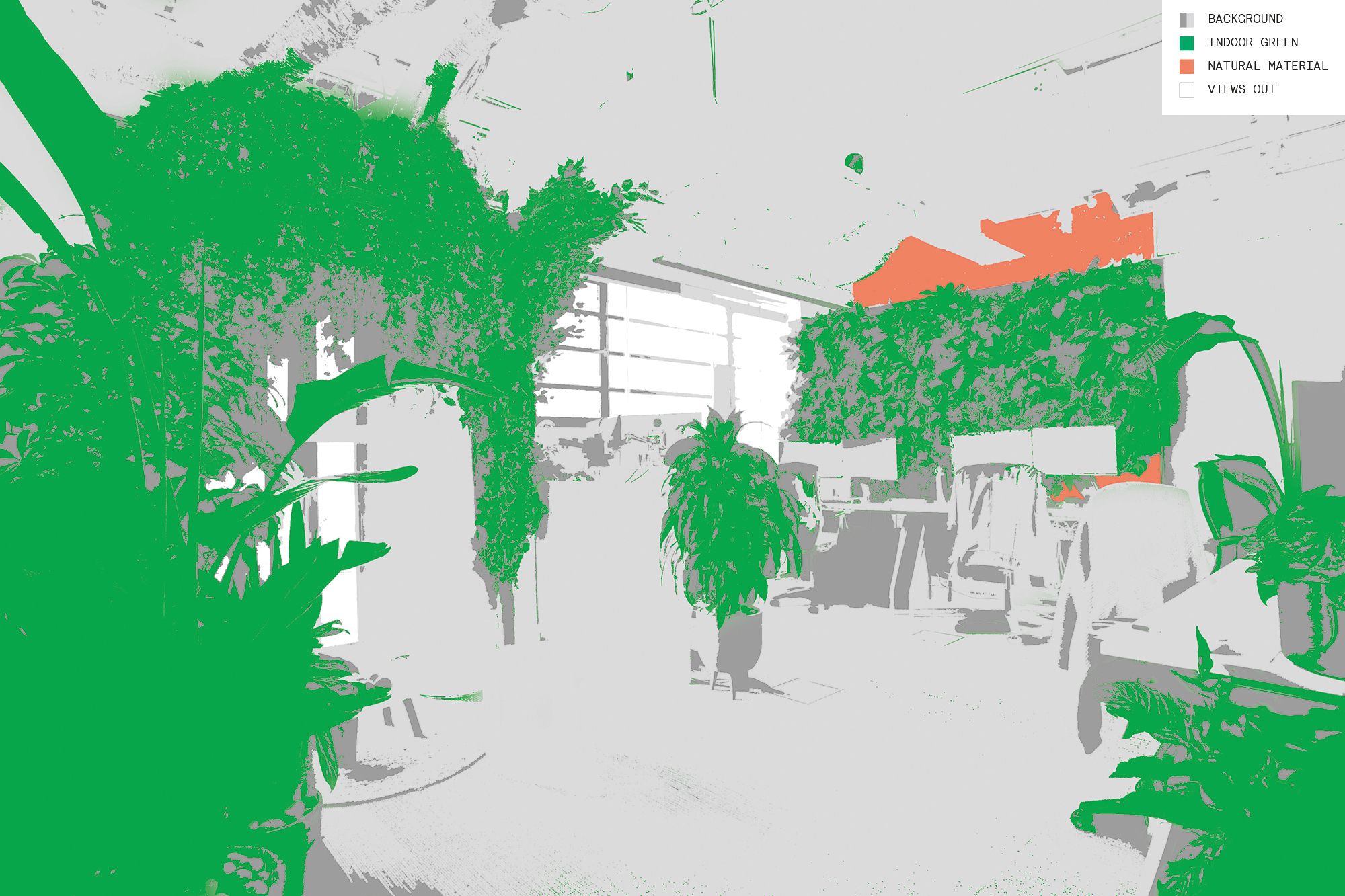
Immersive
Baseline
Typical
Immersive
When indoor plants were removed, during the baseline 2 scenario, it affected the participants’ emotions negatively even though an average indoor environmental quality was maintained.


A value-based approach was used to monetise the well-being and environmental values.
The Warwick Edinburgh Mental Wellbeing Scale (WEMWBS) and a set of healthy-building-related questions were used in weekly questionnaires.
This WEMWBS scale is a well-established and widely used well-being measurement scale in the UK. The life satisfaction score has a financial proxy in the evaluation for each of the scenarios.
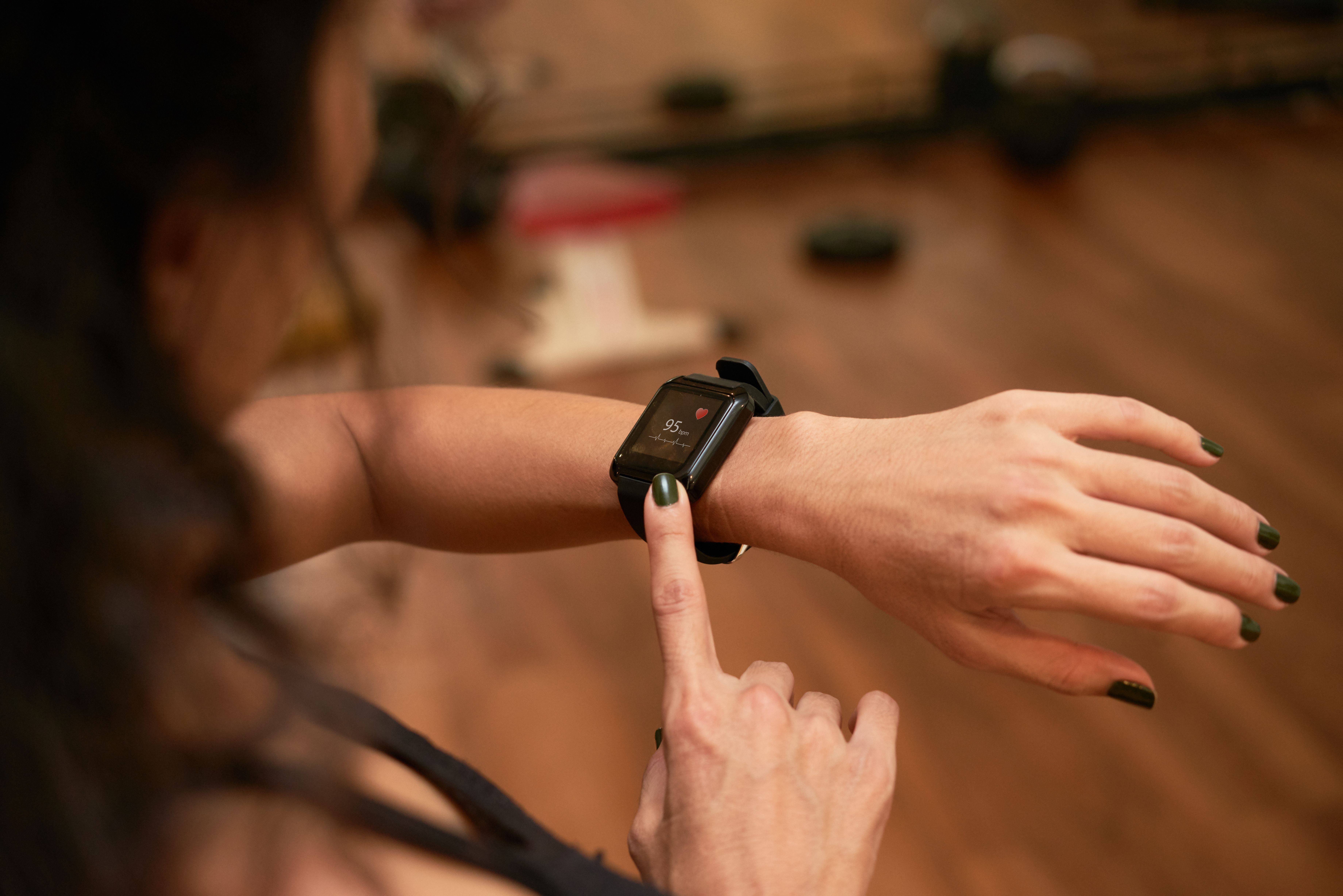
Wearables tracked the participants heartbeat, step count, calorie intake, and sleep quality to measure their overall health. This information was helpful in determining the baseline and any improvements in the occupants' daily health.
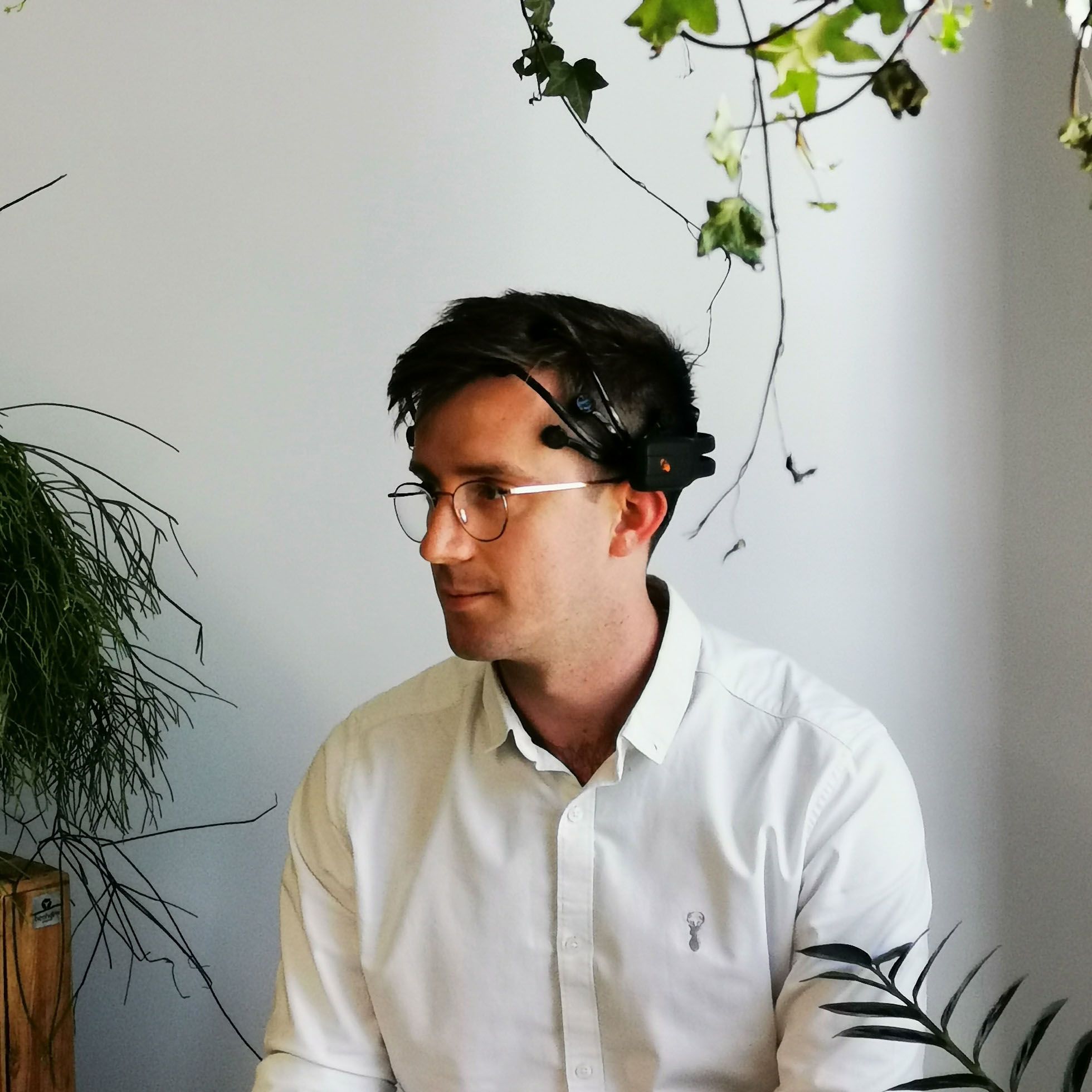
An EEG headset was used to measure brain waves of a participant in the baseline scenario and the various biophilic scenarios. During each test, the participant completed their daily work and brain activity was subsequently measured.
The indoor air quality, as measured by levels of VOC, CO2, humidity, temperature, pressure, light, and virus risk, varied little throughout the study despite changes in participants’ perspectives.

There are methods to, and value in, consistently valuing these types of people-centric outcomes.
6. Results
The biophilic scenarios generated more than double the economic value of the non-biophilic scenario.

This case study is part of Dr. Chan-Schoof's doctoral field-study at the Design School of Loughborough University. Her research revolved around developing a valuing biophilic model to make a business case for human-centric design.
“Without data, we will not be able to prove the business case for biophilic design. We want to make a more direct link upfront to the budget planning stage of the design brief so that companies start having biophilic design in their projects. It will win half the battle for design teams because you will not have to negotiate once the design is finished to introduce biophilia – it would have been integrated into the process”
Joyce Chan, Loughborough University
These data informed the creation of a financial proxy, in the form of a price point, for well-being.
This finding offers an incentive for an organisation to embrace a more people-centric biophilic workplace for its employees and clients.

When attached to a £ sign, biophilic design has the potential to drive commercial decision-making.
7. Conclusion + Credits
We developed a three-pronged approach to measure life satisfaction associated with the sole intervention.
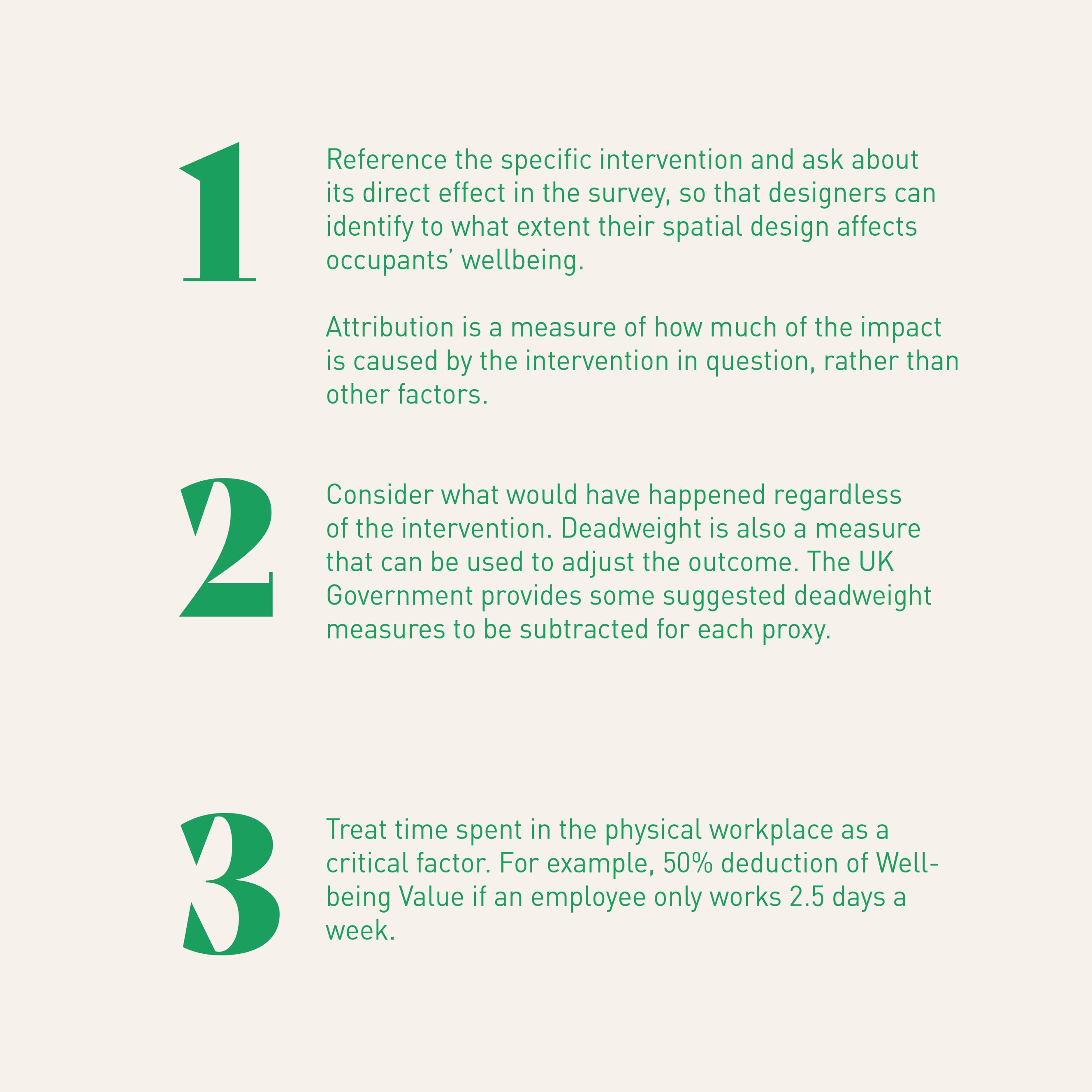
Above all, this study establishes that our surroundings are indivisible from health & well-being.
PLP Researchers
Loughborough University Researchers
University of Reading Researchers
Contributors


Related Projects
View All
What is the future of housing on a remote island at the edge of the world?
Assessment of Ascension Island

What did the pandemic teach us about designing, building, and living together?
This Changes Everything
Is the workplace an enabling or disabling place for neurodivergent people?
Designing for Neurodiversity
What is the future of housing on a remote island at the edge of the world?
Assessment of Ascension Island
What did the pandemic teach us about designing, building, and living together?
This Changes Everything
Is the workplace an enabling or disabling place for neurodivergent people?
Designing for Neurodiversity