Francis Crick Institute
London, UK
A biomedical research institute in London designed to support collaboration, scientific discovery and a strong civic presence.
Architect of Record
HOK
Structural Engineer
AKT II
MEP, Project Manager
Arup
Planning
CBRE
Quantity Surveyor
Turner & Townsend
Contractor
Laing O’Rourke
About
Located beside St Pancras International and the British Library, the Francis Crick Institute is a major biomedical research facility designed to bring together more than 1,000 scientists from different disciplines within one highly collaborative environment. Designed in collaboration with HOK, the building creates a new centre for scientific discovery in the heart of London, combining advanced laboratory infrastructure with spaces that support exchange, visibility and public engagement.
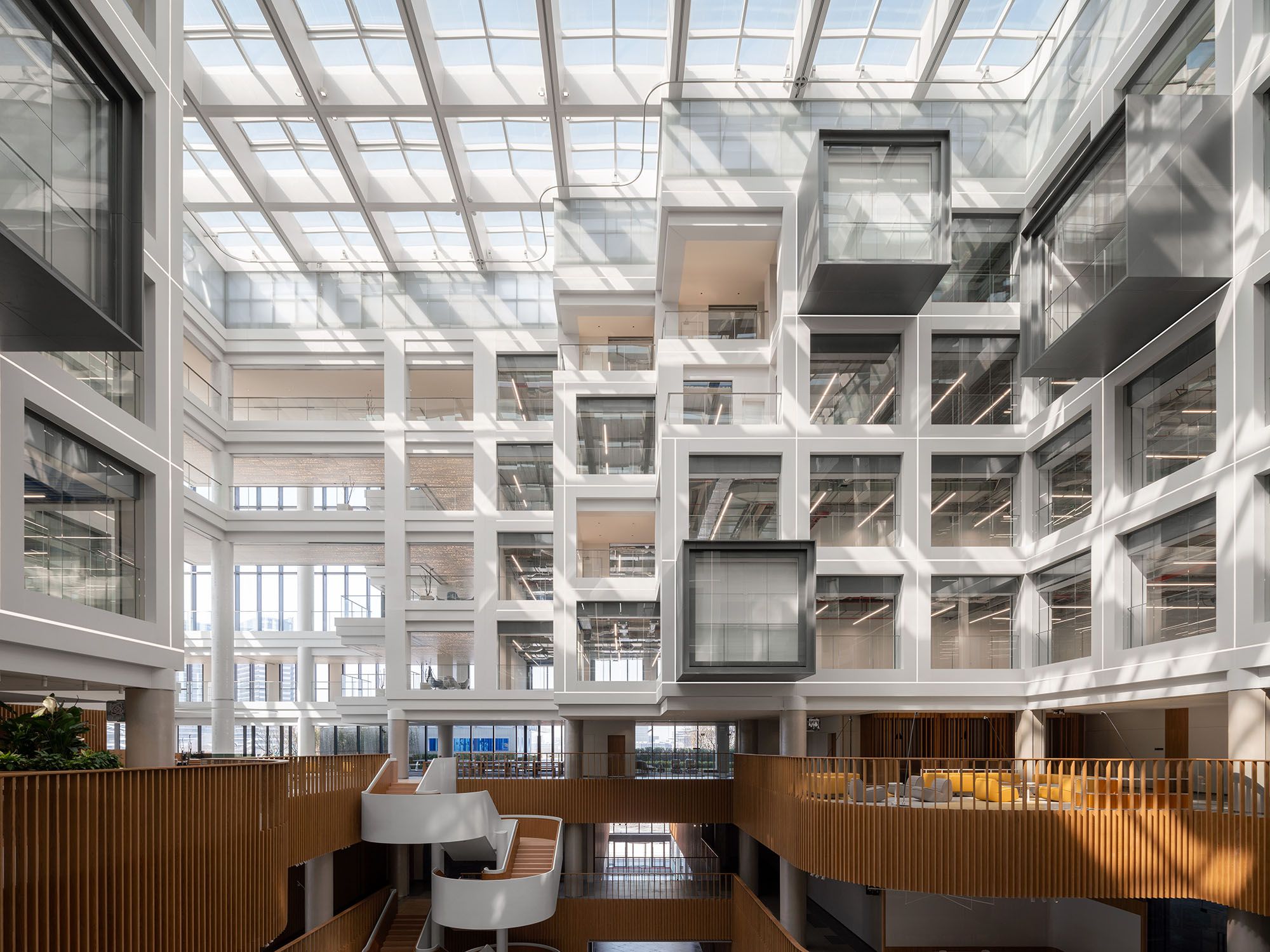
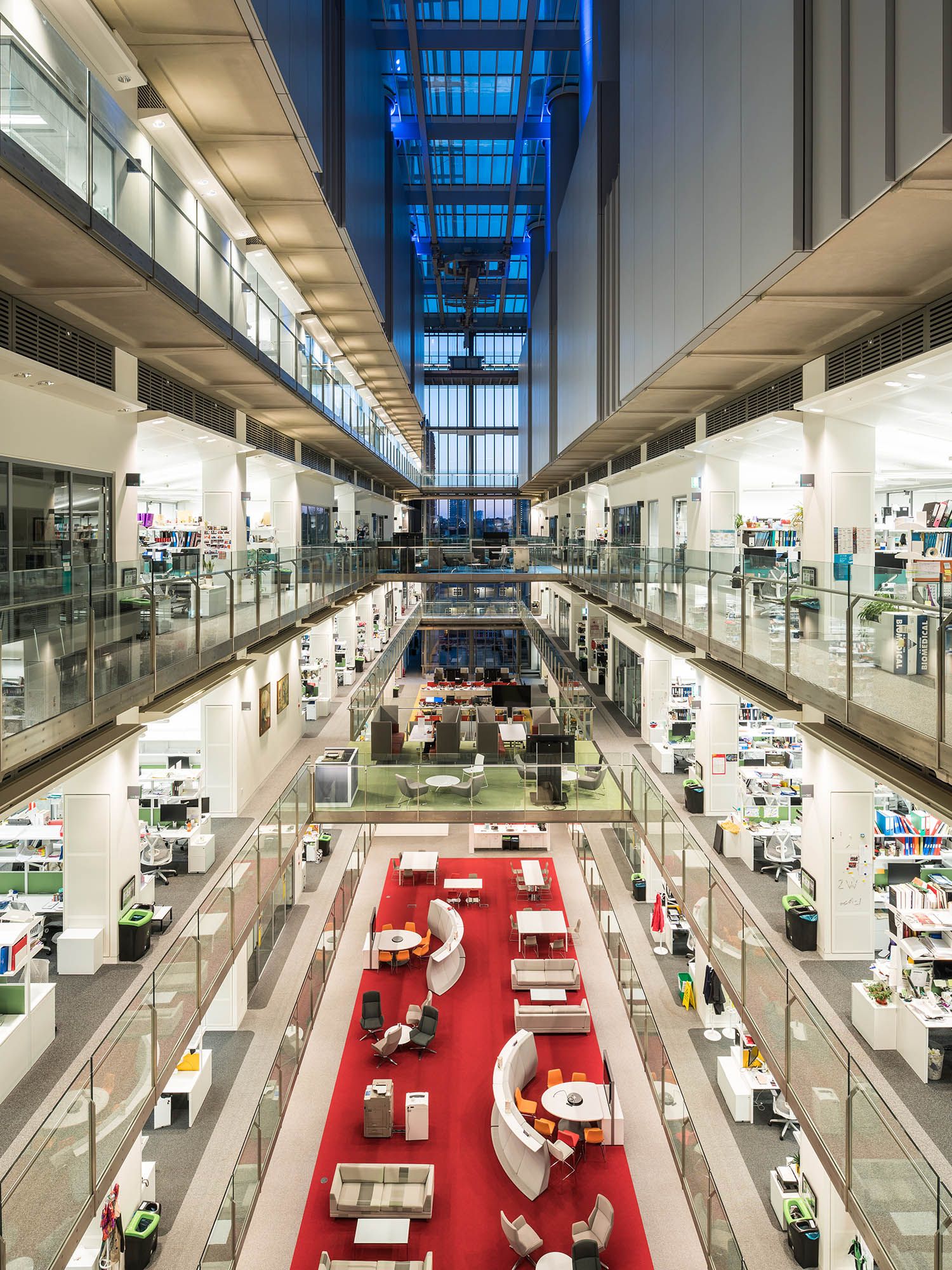
The building is organised around a central east–west atrium, with laboratory wings arranged to encourage movement, interaction and shared use across research teams. Highly flexible lab environments allow spaces to be adapted over time, supporting the changing needs of biomedical science while helping break down traditional barriers between disciplines.
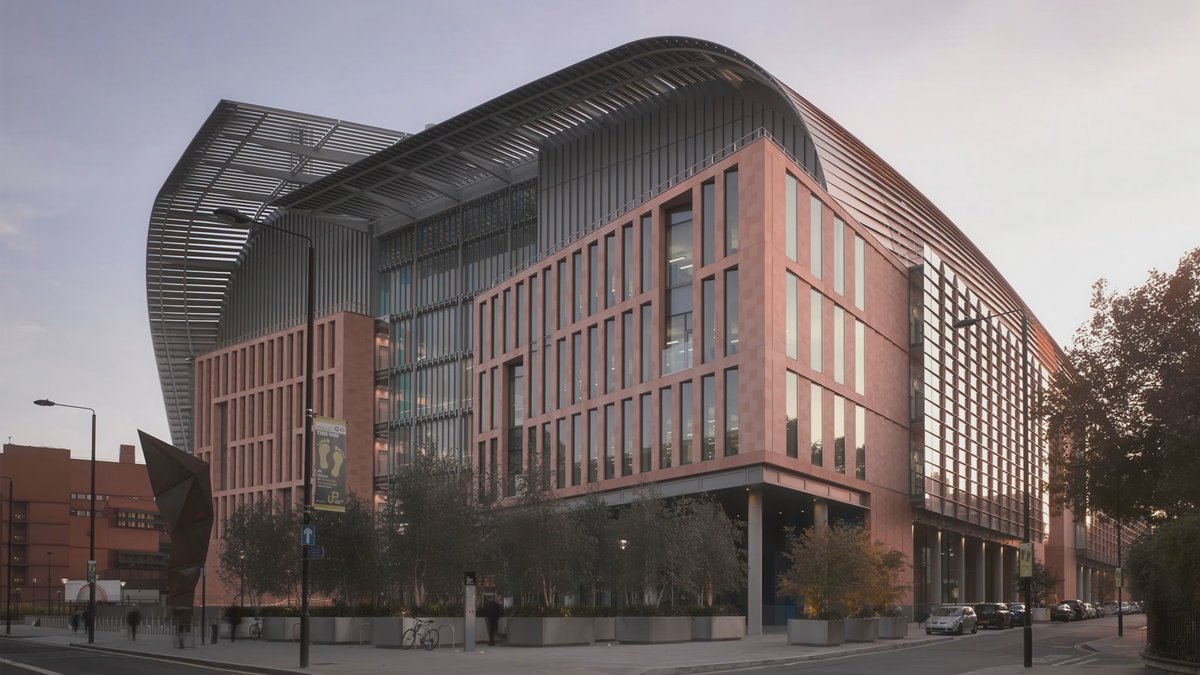
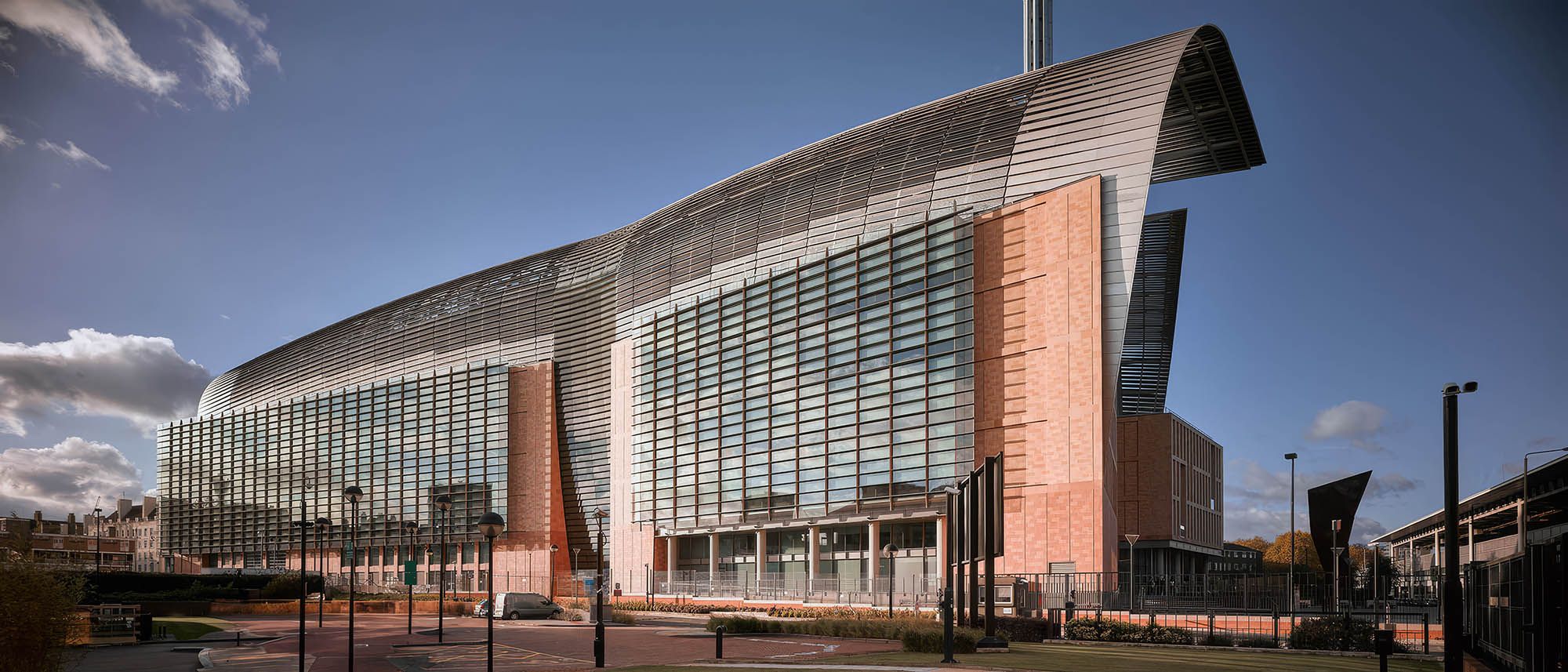
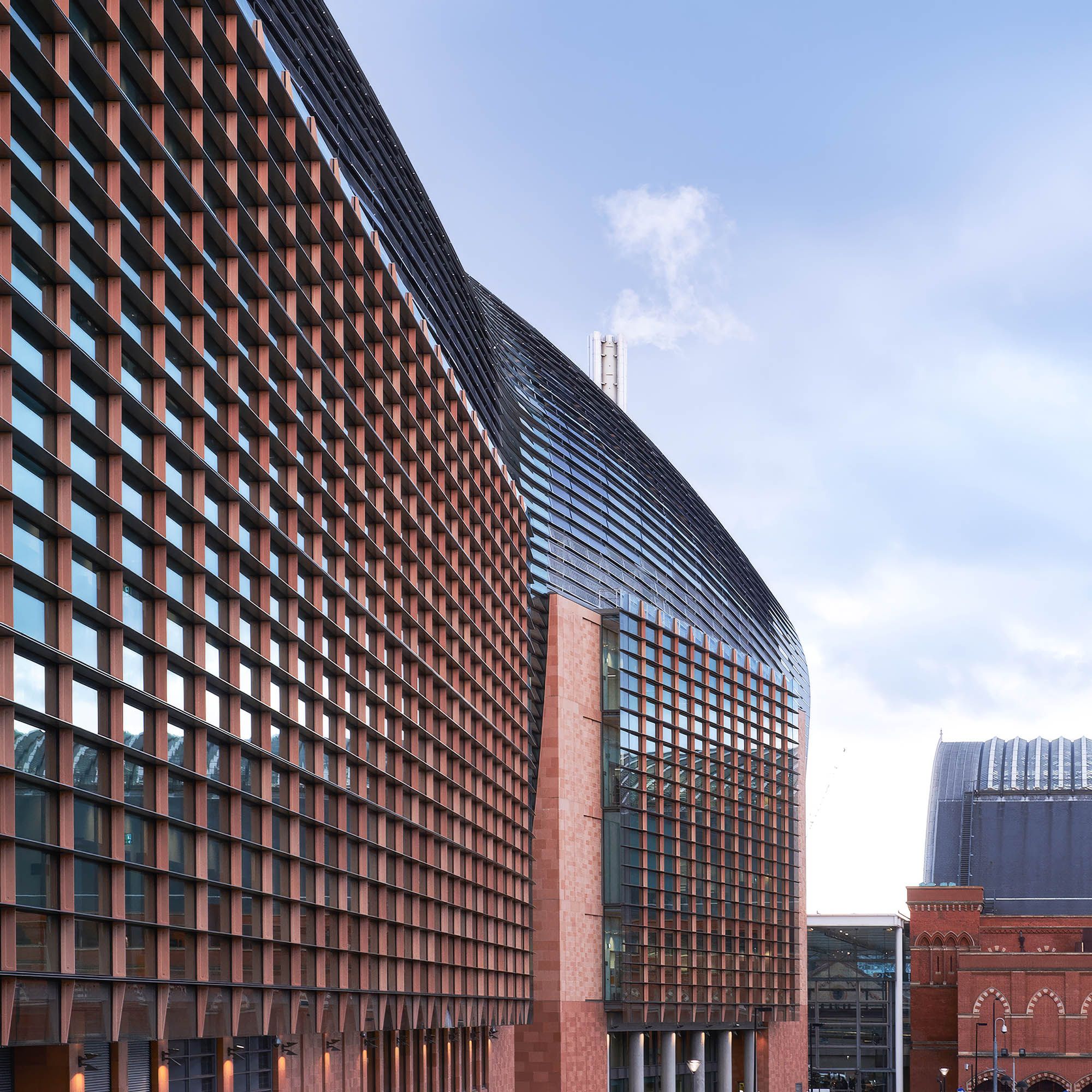
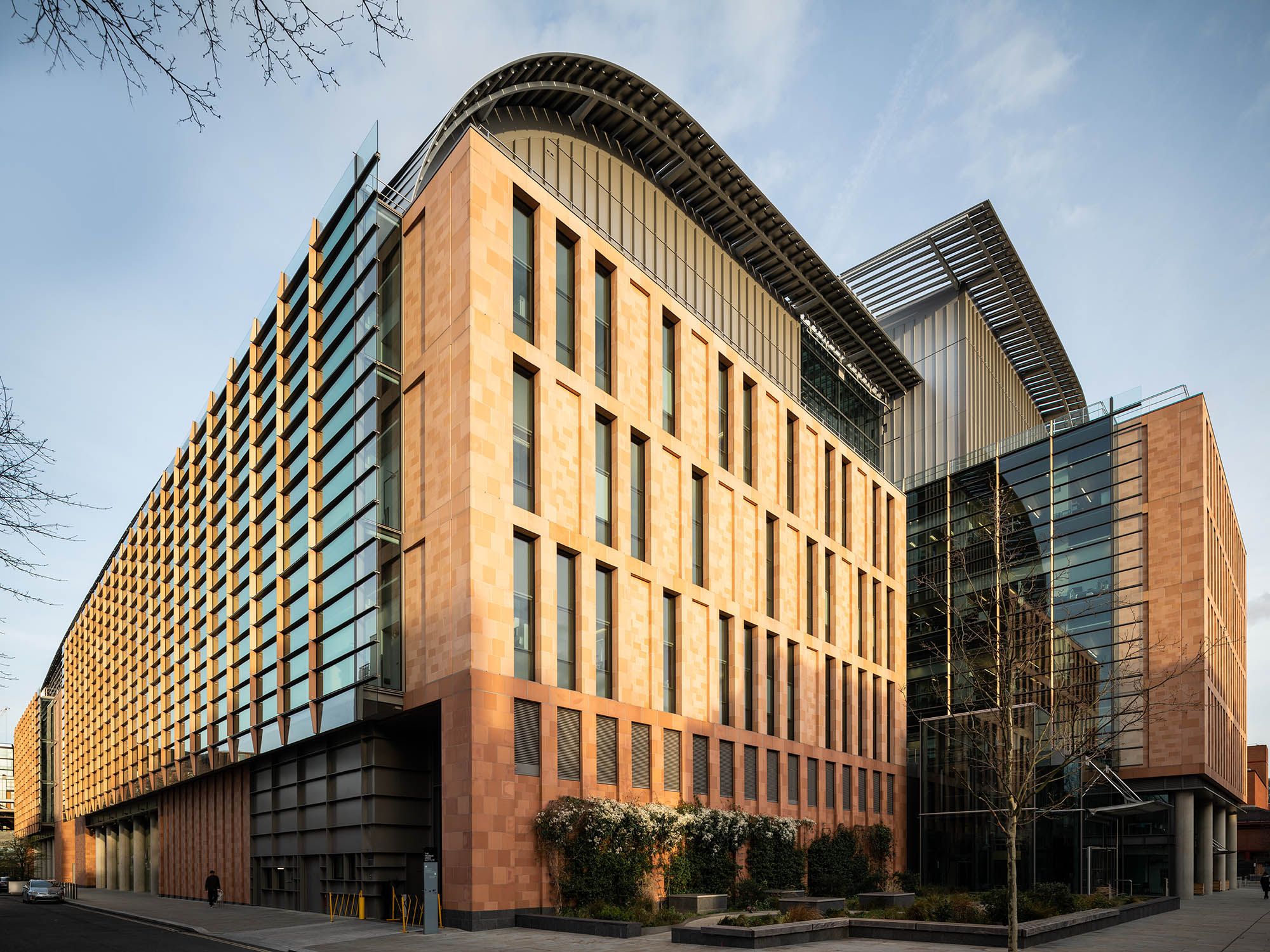
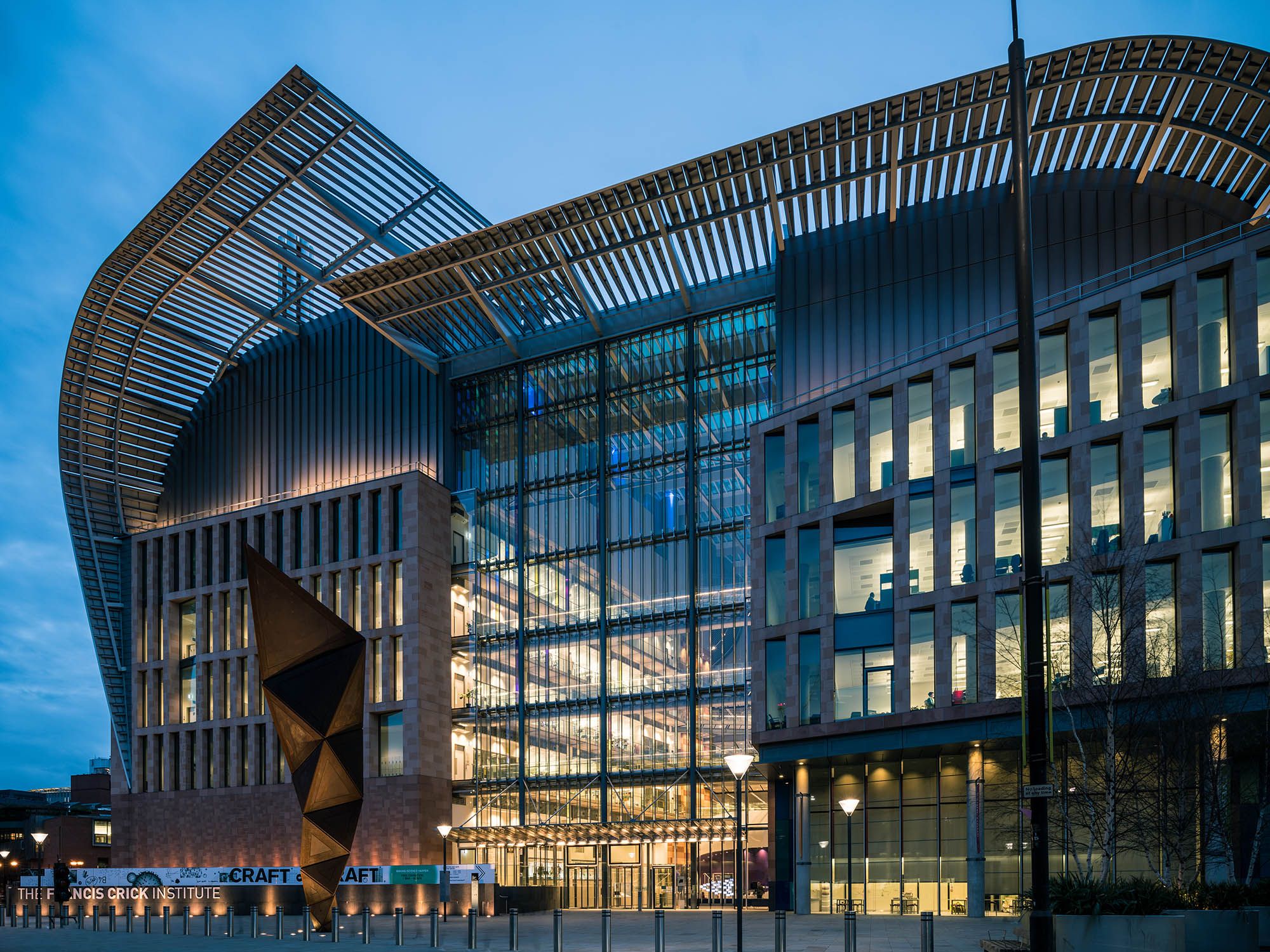
Its architectural expression responds directly to its prominent urban setting. A terracotta masonry base establishes a relationship with the surrounding historic context, while the curved roof forms draw on the industrial profile of nearby St Pancras. Together, these elements give the building a civic scale and identity that reflect the significance of the institution within London’s scientific landscape.
Designed for both technical performance and long-term adaptability, the project balances the demands of a highly serviced research environment with a more open and accessible architectural character. The result is a building that supports world-leading science while contributing positively to the city around it.
Awards
“The Francis Crick Institute will be one of the most significant developments in UK biomedical science for a generation.”


Architectural Identity
The building’s terracotta base establishes a strong relationship to its historic surroundings, while the roofline draws on the industrial character of nearby St Pancras. Together, these elements give the institute a civic presence within its prominent London setting.
Collaboration and visibility
A central atrium brings daylight deep into the building while creating a shared space for movement, interaction and exchange. Laboratories, write-up spaces and circulation routes are arranged to promote visibility and collaboration across research teams.
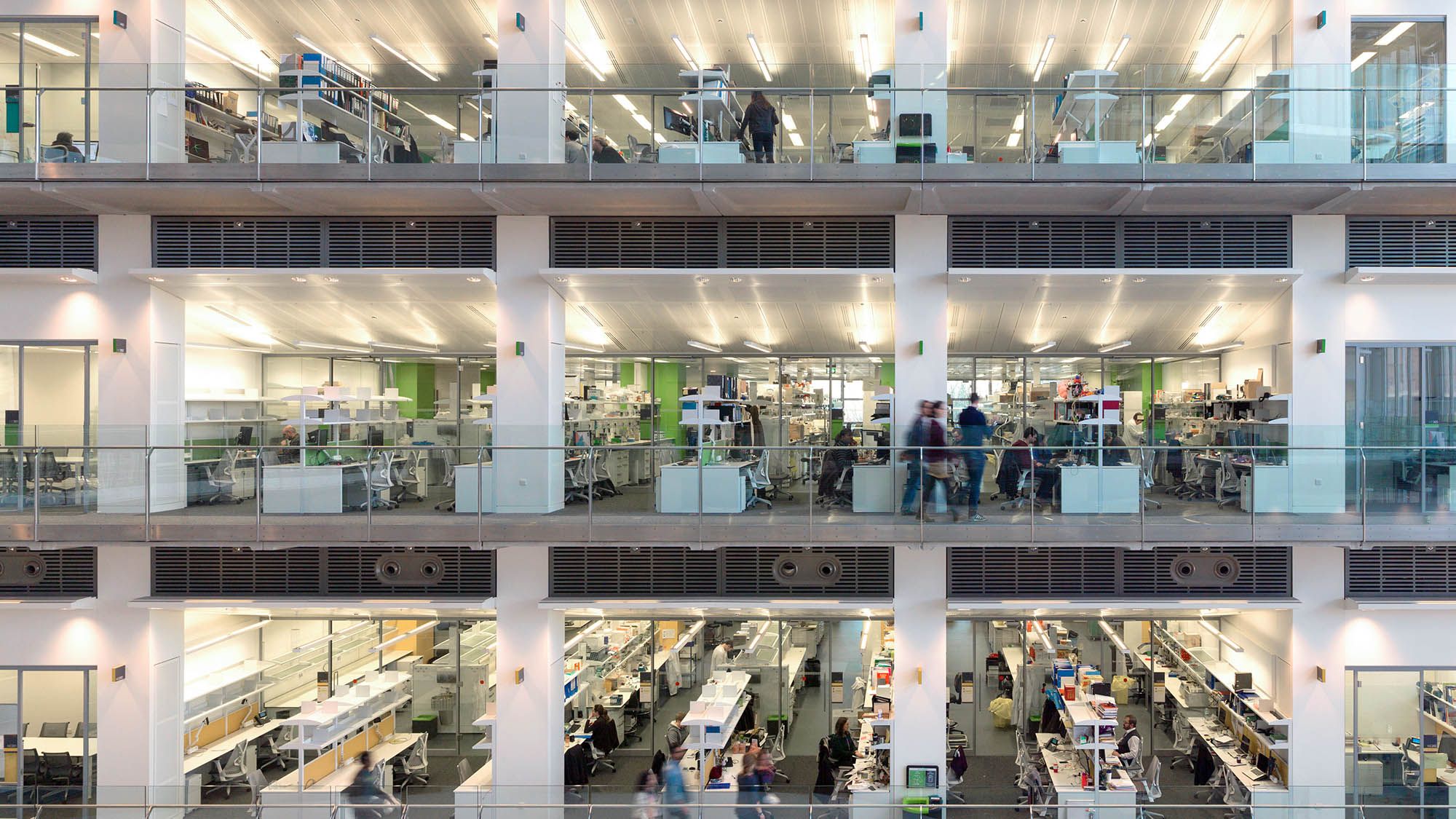
A research building designed to make science visible, collaborative and part of the life of the city, while supporting the changing needs of biomedical discovery over time. The building balances the demands of advanced research infrastructure with a more open and accessible architectural character.


A Place for Discovery
Located beside St Pancras International and the British Library, the Francis Crick Institute is a major biomedical research facility designed to bring together more than 1,000 scientists from different disciplines within one highly collaborative environment.