
Use of Wearable in the Office
Use of Wearables in the Workplace show wearables offer a powerful new way to understand how people actually experience workplaces. Because the most meaningful insights about the workplace don’t come from the building itself, but from the people in it. Wearables like fitness trackers, posture sensors or IEQ sensors can reveal stress triggers or environmental discomfort traditional POE reports overlook. The research was led by PLP Labs with academics from Loughborough University and the University of Reading, and supported by the British Council for Offices. The study draws on real physiological data, indoor environmental measurements, questionnaires and an in-house pilot study. We show combining physiological and environmental wearable data with subjective feedback, we enable architects to design healthier, more supportive environments.
1. Introduction
Can wearables be used as a rigorous research method?
The wearables market is expanding rapidly, as is the range of health conditions they can inform us about.
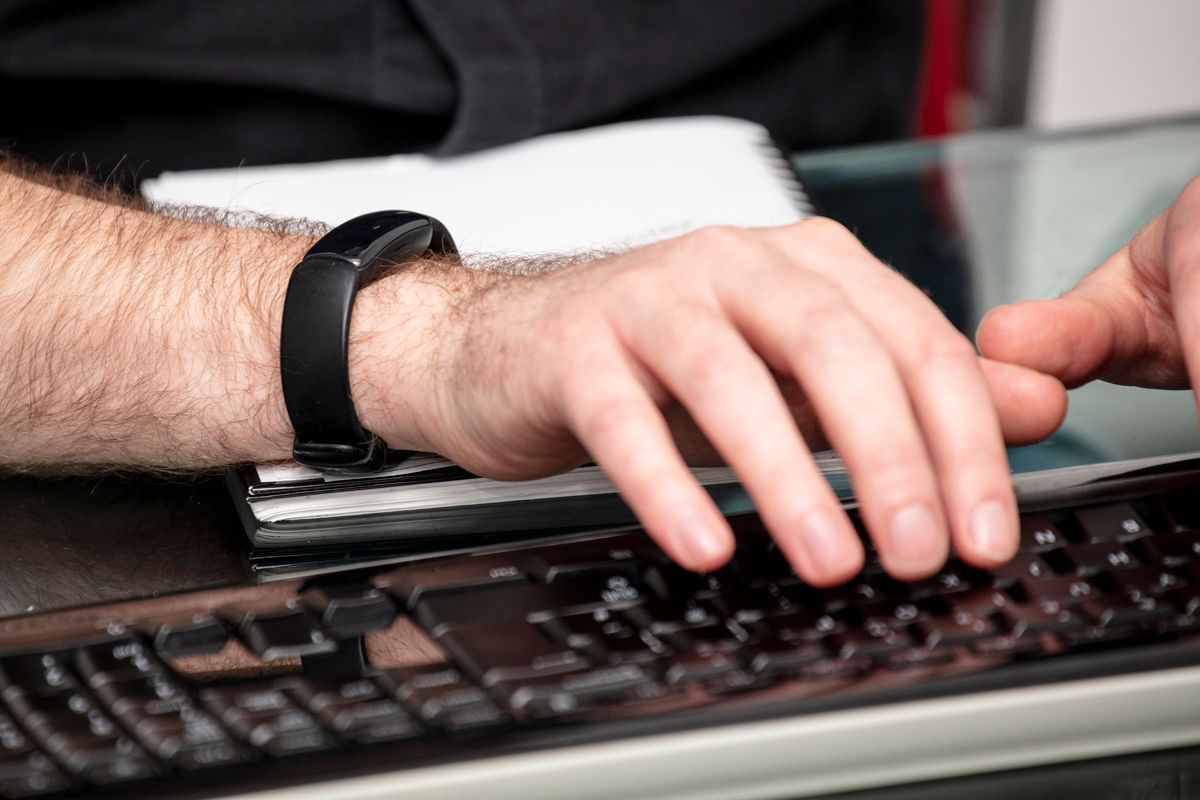
Use of Wearables in the Office explores how wearable technology, such as fitness trackers, posture sensors and IEQ sensors, can provide relevant, objective data to assess wellbeing and environmental quality. The intent is to use this data to support well-being, behaviour change, and post-occupancy evaluations (POE) in the workplace.
This study has three key areas of focus:
2. Health, Wellbeing, and Behaviour Insights
Wearble insights can help occupants self-regulate, support companies in promoting healthier environments, and reduce long-term absenteeism linked to musculoskeletal disorders.
Wearables provide real-time data on heart rate, sleep, stress, posture and movement, allowing organisations to better understand how people physically and psychologically respond to their working environment.
Wearables can detect problems and reveal behavioural patterns, such as inactivity, poor posture and stress triggers.

3. Wearables as tools for Evaluation and Design Feedback
The use of wearables can give a much deeper and more enriched approach to post-occupancy evaluation (POE) in the future.
Wearables can enable POEs by capturing relevant physiological and environmental data. Especially when combined with surveys, wearable data helps create holistic wellbeing profiles.
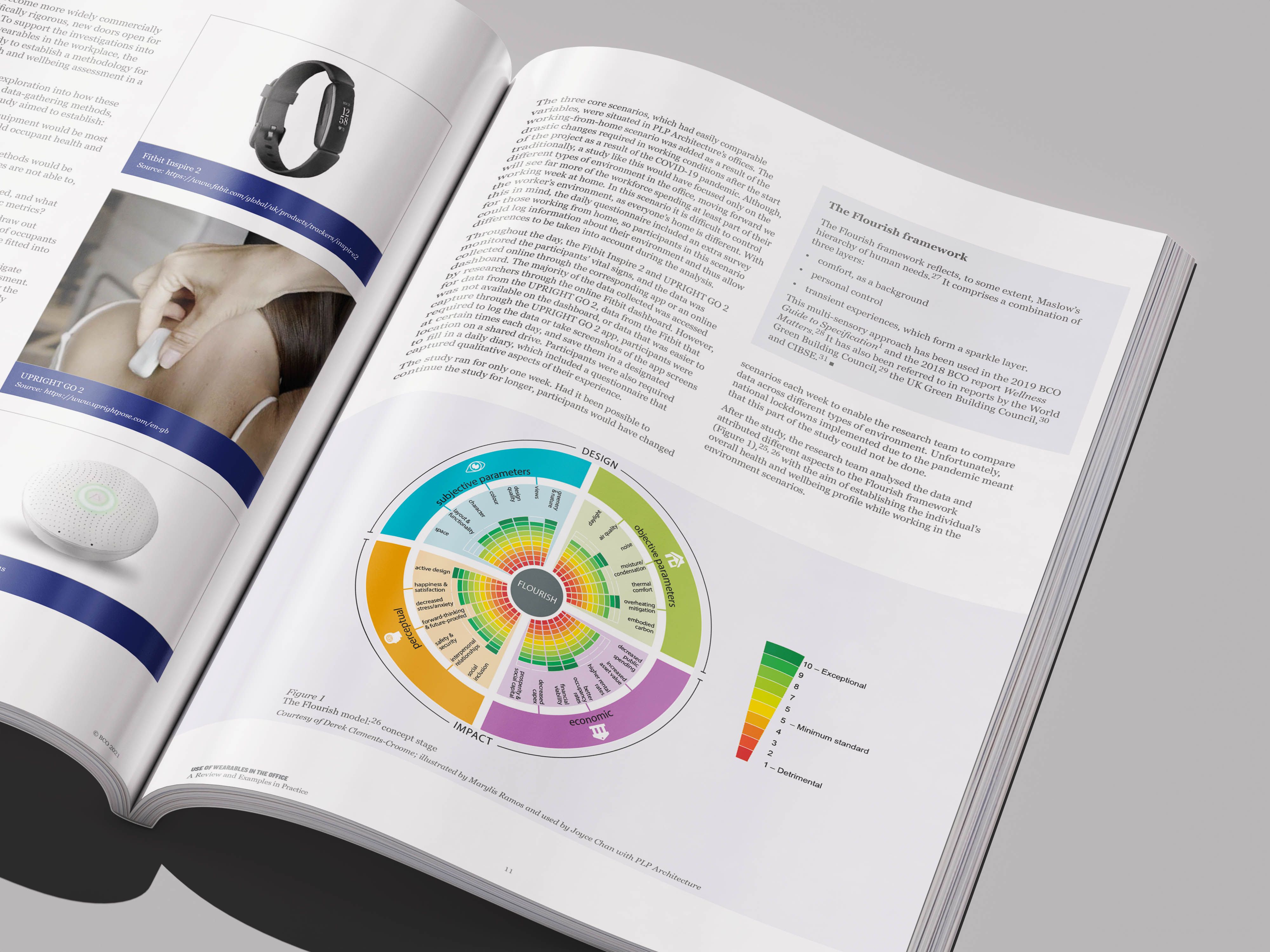
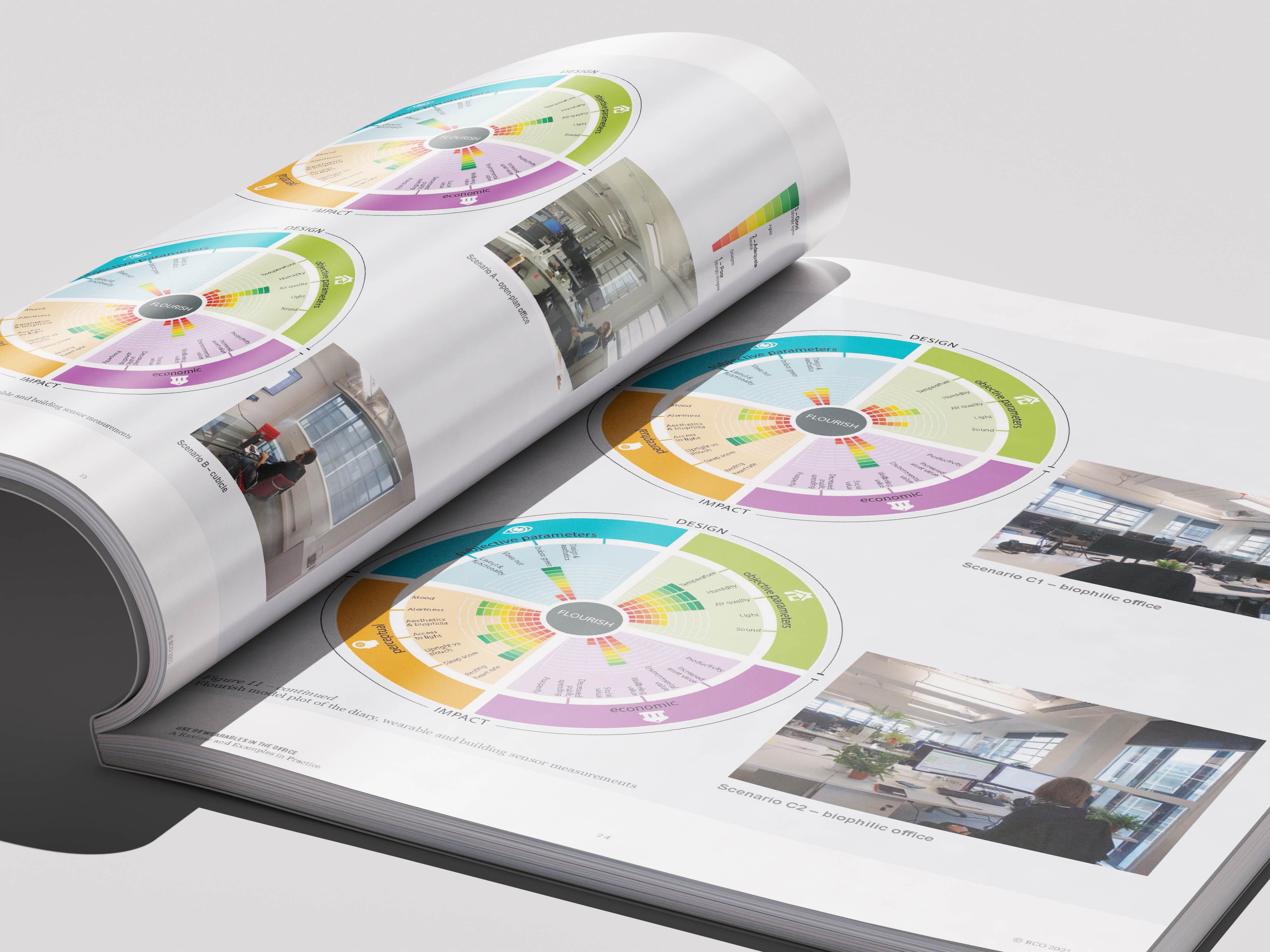
We conducted a pilot study with wearables to compare how different workspace scenarios influence comfort and productivity. We were able to gather relevant data on the body's response to office layout, greenery, environmental quality, and posture support with wearable technology.
This approach allows designers to better understand how design choices, like lighting, acoustics, air quality, and spatial openness influences mood, alertness and health and well-being factors.
4. Future of Wearables in the Workplace
Being able to show tangible metrics and prove it is a huge real estate asset.
We anticipate wearables will become less intrusive and more ubiquitous in the future. This has important implications for the workplace in terms of virus detection, tailoring thermal comfort, and creating interconnected IoT environments via wearables.
From a landlord POV, integration of wearables can help building owners guarantee environmental and wellbeing outcomes. Wearable data can be used to hold our building environments accountable and in asset valuation.


5. Conclusion + Credits
Wearables help us become aware of the health of our bodies.

PLP Researchers
University of Reading Researchers
Loughborough University Researcher
Contributors